

The Day Jobs That Inspired Famous Authors
Here we have a fantastic infographic produced by the popular jobs website Adzuna all about well known authors who were inspired to write famous books whilst working ordinary day jobs. Learn about the job that Bram Stoker had when he wrote Dracula, the job that John Grisham had when he wrote A Time to kill, the job that Stephen King had when he wrote Carrie and lots more by checking out this well designed piece.
We hope that you enjoy this famous authors day jobs infographic and please share with your friends on social media.

What You Wish You'd Known Before Your Job Interview
Here is a fantastic infographic produced by a website called Classes and Careers that is packed with information that will help you to ace your next job interview. The infographic is broken down into sections including common non-verbal mistakes made at a job interview, top ten most common mistakes made at a job interview, most common tips about interviewing and more.
We hope that checking out this infographic will help you land your dream job and please share with your friends on Facebook, Twitter, Google+ etc.

Govt delays rail improvements

The new Conservative government has announced a delay in the modernisation of the UK's rail network.
Despite unveiling a series of upgrade programmes that would bring the country's railways into the 21st century in its election campaigning, the government has conceded that the plans are now untenable in their current format. The north of England will bear the brunt of the changes with key routes being shelved.
Improvements to the TransPennine line between York and Manchester have been shelved, as has the Midland main line between York and Sheffield. Cities such as Derby, Nottingham and Leicester will have to wait for improved services to London as the government believes the Great Western main line between London and Cardiff is more of a priority.
Transport secretary Patrick McLoughlin confirmed that rising costs and missed targets were the reasons why the £38.5 billion plan has become untenable. Commentators have explained that this decision will mean that the improvements will now take longer to be brought to fruition and ultimately cost more.
The move has generated major criticism from opposition parties. While Network Rail said the plan would be the "largest modernisation of the railways since Victorian time" it has turned out to be too ambitious, Labour sees it as an example of the Conservatives breaking election promises.
Michael Dugher, shadow transport secretary, said: "We have been warning time and time again there needs to be fundamental changes in how our railways are run. You spent the election campaign repeating promises you knew you would break after the election.
"Ministers may try to shift all the blame to Network Rail, but this happened on the government's watch and the responsibility for this mess lies squarely with the government."
In the run-up to the election, the state of the UK's rail network was a major focus for many of the parties with all of them in agreement that work needed to be done to upgrade the current system. A series of electrification programmes were laid out while chancellor George Osborne stressed the need to create a 'Northern Powerhouse'.
This would require much improved rail links and slash the journey times between a number of the major cities in the north of England. There have also been discussions about rolling out the much-criticised HS2 programme to cities like Leeds and Manchester, and then Newcastle in a bid to connect the north with London.
Alongside the delay for the improvement work, figures from Transport Focus highlighted that satisfaction in the nation's rail networks had been falling in the past 12 months. Passengers in London and the south-east of England were the least happy with the service while the overall satisfaction had fallen from 82 per cent to 80 per cent in the space of a year.
First Hull Trains recorded the highest satisfaction rate at 96 per cent while Southern was bottom of the pile with just 72 per cent.
Commenting on the figures, Transport Focus chief executive, Anthony Smith said: "Commuters will not be surprised at these results. Long-term plans and investment are important and welcome – how the work is carried out, though, is crucial."
BPA to roll out parking master plan

The British Parking Association (BPA) is looking to raise standards across the parking profession with the launch of a new initiative.
Next week (June 29th), the organisation will launch its Master Plan for Parking 2015-16. BPA president Philip Hammer will present the sixth Master Plan at the House of Commons and it will detail how it can work alongside the government to improve the way parking regulations are controlled across the UK.
Every motorist across the country will have had to battle the eternal struggle which is being able to find an available car parking space in busy towns and cities. They can also be met with extortionate prices when they enter multi-storey facilities, not to mention the congestion getting to and from these locations.
This has prompted the BPA to demonstrate ways in which it can be improved. Writing in its latest Monday Musing column, the organisation wants to look at other aspects which could improve the way parking is managed in the UK. One particular concern recently brought to light is parking on pavements.
The Guide Dogs UK, along with the BPA, has lent its support to a Private Members Bill which aims to ban all parking on pavements. Such is the BPA's desire to put an end to this attitude towards street parking, it features heavily in its Master Plan. It writes that it is committed to the "development of common standards in management and enforcement of parking on footways and areas used by pedestrians across the UK".
Aside from the issue of pavement parking, the BPA will call for the introduction of Civil Parking Enforcement across Scotland. The new initiative will provide Scottish Local Authorities with up-to-date traffic management legislation and also give the Scottish government the impetus to improve the Scottish Parking Appeals Service.
The latter is something which the BPA believes needs to be modernised and be more transparent when it is tasked with dealing with both local authorities and motorists. South of the border in England, the BPA wants to introduce a regular review system which will include the appraisal of penalty charges.
Officials want to enforce the need for parking rules to be respected and upheld and reviewing the penalty charges is something the organisation believes will reinforce this. It hopes that further compliance will help to reduce congestion in towns and cities as well as key traffic hotspots around the land.
However, the main focus of the BPA's Master Plan is the launch of SPACE. This stands for Setting standards, Promoting professionalism, Advocating sustainability, Challenging perceptions and Encouraging innovation. The organisation is looking to achieve the best outcome for both motorists and the wider parking profession.
It concluded by adding: "There’s always SPACE for parking in any debate and we will do our best to ensure parking features prominently this year to ensure better management and delivery of services for the benefit of all."
Stagecoach Boosted by Rail Performance

The UK's rail network has undergone somewhat of a revolution in recent months.
Great Britain's East Coast Main Line is one of the cornerstones of the country's rail network linking both English and Scottish capitals. Services run between London and Edinburgh daily, along with additional routes to Leeds, regularly throughout the week providing passengers with reliable and quick links to either major city.
This route has been passed between the private and public sector over the years and when National Express Group was selected for the contract in 2007 it seemed that it would stay in private hands. However, the ownership was short-lived and by 2009, National Express conceded it was unable to fund the franchise and it was handed to the Directly Operated Railways (DOR), set up by the Department for Transport (DfT).
Back in public hands, under the East Coast banner, it ran smoothly with passengers happy with the service and also the loyalty scheme which allowed them to build up points for free trips or other incentives. However, in March 2015 InterCity East Coast won the tender to take over the franchise changing it to Virgin Train East Coast.
The partnership, a joint venture between Stagecoach and Virgin, would take control of the main line through to March 2023. It drew major criticism by rail unions such as the TSSA whose leader Manuel Cortes branded the franchise award "a national disgrace". However, it has provided some good news for one of the owners.
Stagecoach announced on Wednesday (June 24th) that it had recorded an increase in underlying pre-tax profits. It noted that its 2.4 per cent rise to £185 million in the year to April 30th had been helped by a positive performance in its rail division.
The success of the East Coast Main Line had boosted earnings up to £28 million, representing a £2.6 million rise from the same period a year earlier. This was set against a poor performance across the wider UK rail business including South West Trains and East Midlands Trains. Revenue for this area dropped 22 per cent to £26.9 million.
Officials noted that this fall was down to the rise in premium payments to the UK government. However, for Stagecoach it was a real shot in the arm after it was hit hard by tumbling fuel prices in the US. The company, which owns the Megabus brand, noted that the US' drop in petrol costs has had a detrimental effect on it operations.
Despite this blow, Martin Griffiths, chief executive of Stagecoach, was upbeat about the company's performance. He said: "These are a solid set of results notwithstanding continued tight central and local government spending, and increased competition for public transport from the private car driven by lower fuel prices.
"We have a strong set of bus and rail businesses in the UK, mainland Europe and North America. Our successful strategy is focused on providing a good value, high quality travel experience for our customers, and investing for growth over the medium to long-term."
Merger to trigger Ladbrokes revival?

Switch on the television nowadays and viewers are inundated with a barrage of betting adverts.
Whether it is Ray Winstone telling them to "av a bang on that [sic]" or a chauffeur describing betting as getting "the closest to the game", our televisions seem to be awash with these adverts. Premier League football matches broadcast live on Sky have to cram in a betting ad in the 30 seconds before kick-off just to remind everyone to have a flutter during the game.
It is now easier than ever before to place bets. With bookmakers creating apps for smartphones and tablets alongside their online offering for computer and laptop users, punters can place a bet around the clock on any sport they fancy. It would seem that bookmakers are thriving in this newfound betting environment.
However, flashback to February 2015 and high street bookmaker Ladbrokes announced that it would be closing 60 UK shops following a significant fall in pre-tax profit in 2014. The company revealed that profits fell from £68 million to £38 million in the space of 12 months. It blamed "regulatory headwinds" combined with a poor Boxing Day for its slump.
This prompted a change in approach from Ladbrokes with the company now looking to focus on digital and international growth. During the same period in which its profits dropped to £38 million, it had seen a 23 per cent increase in revenue. Ladbrokes is now looking to make a further step in the right direction with the announcement of a potentially groundbreaking deal.
The company confirmed on Tuesday (June 23rd) that it was in talks with Gala Coral Group about a potential merger of the two organisations. It is the second time Ladbrokes has attempted to join forces with Coral. In 1998, it had outlined a bid to buy its rival but was stopped by the government which had concerns over a reduction in competition.
At the time, the then Trade and Industry Secretary Peter Mandelson said the transaction could lead to a "weakening of price competition at the national level" and reduce consumer choice. The verdict resulted in Ladbrokes backing down. However, it is now back to discuss merger options with Coral.
Jim Mullen, Ladbrokes chief executive, explained: "A merger with Gala Coral could create a combined business with significant scale and has the potential to generate substantial cost synergies, creating value for both companies' shareholders."
Despite his positivity about the deal, Mr Mullen maintained that there was no certainty that the initial talks would lead to an agreement. Ladbrokes and Coral are still to pin down possible terms and timings and it is expected to be a long process.
Mr Mullen also explained that Ladbrokes' board is still to decide whether or not a merger with Coral would be "strategically attractive". It is considering if it could be "delivered to shareholders on appropriate terms" and this positioning could potentially mean that the talks are postponed while a decision is made.
Should the merger go ahead it would be classified as a reverse takeover of Ladbrokes.
Technology continues to drive travel
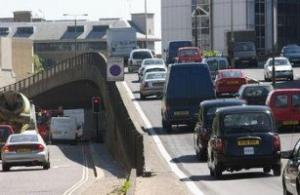
The world we live in today has been shaped by technology and will continue to be influenced for generations to come.
When picking out a mobile phone, the call and text functions are no longer a priority with many people wanting faster internet speeds and higher pixel cameras built into their handset. This means we are constantly connected with everything that is going in the world, at the touch of a button.
There was a time when you'd get on a bus and notice a sea of newspapers, now this has turned into people staring into their phones. This is how the world has progressed and consumers now demand to have information available to them at all times. Some buses even provide free on-board Wi-Fi to make access even easier.
Technology has been transforming pretty much every aspect of modern life. From the smartphone to smart TV to the hybrid car, there have been so many changes in recent years that it is hard to really keep up. Despite the many advances, one thing that hasn't changed during this timeframe is the problem of traffic congestion.
However, the British Parking Association (BPA) believes that with the right application, technology could provide an answer to tackling congestion on UK roads. As part of its 'Monday Musing' column on its official website, the BPA highlighted the problem that gridlocked roads and tailbacks can have on businesses.
Research by the Department for Transport (DfT) estimates that road traffic in England will grow by 43 per cent by 2040. This was based on population growth, economic growth and fuel costs, highlighting the need for more stringent methods which can alleviate congestion.
David Metz, visiting professor at University College London and former chief scientific advisor at the DfT, explains that more can be done to reduce traffic congestion through technology. Mr Metz explained that government agencies such as Highways England should use historic data to generate better predictive traffic information.
Elements such as big data could prove key in these instances. This method of collecting information can provide insights and open up opportunities for the creation of improved future road planning and the monitoring of vehicle numbers. By utilising the technology available it could help to develop solutions to tackling road congestion.
A move away from the car?
Something which the BPA hypothesised in its column was a notion that technology could actually be pushing drivers away from owning cars. It suggested that people are now spending more on gadgets for their home and having a vehicle to get from A to B is becoming less of a priority.
While having a car is functional, many consumers are seeing it as a major expense. The price of fuel, insurance, repairs and tax can continue to add up and many consider something which they just can not afford. Thanks to the availability of public transport, consumers are opting for this method rather than investing in a car.
Technology can improve congestion but if this trend continues it could also help reduce the amount of cars on the road.
Time to adopt a different approach to journey planning?

One of the worst parts of the average day is the commute.
Whether it be on board crowded buses and trains or stuck in traffic jams, the journey to and from the workplace can really put people in a foul mood. Driving especially can become a real hassle when wanting to start the day. Whether it is constant roadworks or having to scrape layer upon layer of ice from the windscreen on those freezing January mornings, the commute can really be a pain.
Another of the problems that many people face is searching for the elusive parking space in towns and cities. If a company does not provide a private car park then it can be a battle every morning to find a space to drop the car before heading into work. This is where the British Parking Association (BPA) is looking to make a change.
From its recent 'Monday Musing' column, the BPA discusses the notion of 'Intelligent Mobility'. A term defined by the Transport Systems Catapult (TSC) as a 'smarter approach to journeys'; it is something that aims to make driving just an enjoyable experience for everyone involved. One of the methods is embracing new technology.
The BPA and the TSC are currently working towards a solution that will deliver smarter, greener and more efficient ways of travelling. A move towards energy efficiency has already been launched in the public transport sector with the introduction of zero emissions buses, which help to reduce greenhouse gases in city centres.
An area where the BPA is aiming to improve is the parking policy in towns and cities across the country. The organisations recognise that the state and availability of parking is one of the major factors in what form of transport people choose to take to get to the workplace and any form of technology that could improve this will be beneficial.
Writing in its column, the BPA states: "We recognise that ongoing research is key to developing policy and to influencing policy change among government, local authority and health service leaders.
"Policy will then drive the technology - whatever that might be in the intelligent mobility arena – including autonomous vehicles, payment systems or in-vehicle guidance systems."
To make these aims become a reality, the BPA is looking to create links with shareholders of intelligent mobility groups to harness the power of technology. Any form of aid when it comes to parking can be useful for drivers and alleviate some of the stresses that comes with visiting a new city.
As the use of mobile devices continues to rise and the creation of applications is more prevalent than ever, the organisations believe that this could make journeys much easier and stress-free for motorists. Even something as simple as a live update of the nearest available car parks could make such a huge difference to people who are having to drive on a regular basis.
While the days of the grinding commute may persist for a couple more years, the BPA and TSC are aiming to make inroads into tackling it.
High street on the road to recovery?
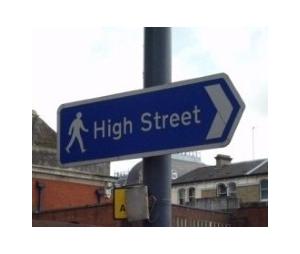
The way the average person shops has been going through a revolution in recent years.
In previous generations, entire days were spent pounding the pavements of city centres hunting for bargains and the odd treat from the various high street stores. However, thanks to the advancements in technology this has changed significantly. Now everything is available at the touch of a button.
With the rise and rise of smartphone and tablet devices, people can order their groceries, clothing and all other goods over the internet and either have them delivered or ready to pick up in store. This change in consumer behaviour has had a somewhat detrimental effect on the high street and has led to a number of high-profile casualties.
Big names such as HMV, Phones4U and Blacks Leisure have all previously entered administration shutting a raft of outlets. It has resulted in a number of empty stores across city centres but a recent report has provided a bit of positivity for the future of the high street retail sector.
Advisory consultants FRP Advisory released data which highlighted that since the turn of the year there has been a significant fall in the amount of major administrations across the UK. Since the beginning of 2015 only three companies have fallen into financial difficulty, compared to the 13 recorded a year earlier.
Companies have also been performing well in the face of adversity with around 70 per cent of those dropping into administration emerging again. This was a marked improvement from the 42 per cent during 2014, a figure which would have been much worse had a rescue operation for a large part of the beleaguered Phones4U.
There were casualties in the administration of these retailers with 4,900 jobs being lost from the 9,800 affected. The likes of La Senza, Jane Norman and Internacionale also experienced job losses which were included in the figures. However, analysts believe that the high street is starting to head towards to a more positive outcome.
Glyn Mummery, partner at FRP, said: "It is re-emerging after four years of significant store culling, in a fitter albeit leaner shape with retailers having to cope with a new norm of tougher operating margins but boosted by a return in consumer confidence and spending power helped by cheaper fuel costs.
"It is re-emerging after four years of significant store culling, in a fitter albeit leaner shape with retailers having to cope with a new norm of tougher operating margins but boosted by a return in consumer confidence and spending power helped by cheaper fuel costs."
A return to the golden years for the high street can only be good news for the recruitment sector. As shops begin to grow in confidence they can start strengthening and eventually, if the upward trend continues, embark on an expansion programme that would see more staff being brought onboard.
It highlights that the bricks and mortar stores that have become household names are fighting back against the rise of online shopping.
Become a business development manager

A growing number of firms are on the lookout for business development managers in order to assist expansion plans and promote growth.
As a business development manager you will be entering a fast paced market that contains plenty of job opportunities and career prospects.
Your main responsibilities will be to work alongside firms to develop, expand and generate new business opportunities.
You will then exploit those opportunities to bring in greater profitability.
The exact nature of the job will vary depending upon what type of company you are working for, and the services they offer.
However, the role will include aspects of marketing, product development and distribution, making presentations, meeting with clients and drawing up contracts. As a business development manager you will need to be skilled in business administration, economics and finance.
So how do you become a successful business development manager?
Well, the key to it all is research. Conducting effective research is one of the main ways you will find new opportunities on behalf of clients, and it is also one of the ways in which you will find opportunities for yourself.
If you have no prior experience of working as a business development manager, then the first thing you will need to is find out what the needs of your target companies are, and identify their pain points.
You will also need to be familiar with their industry and the way it works. This will make it easier to determine what skills and qualifications you need to assist them in their goal.
As sales and marketing will be two of the key attributes you will need, you should definitely seek to improve your expertise in these areas.
If you have not got the relevant experience, it will be worth seeking jobs or internships that will allow you to harness these skills - and it will also look great on your CV.
In order to succeed, you will need strong interpersonal and organisational skills. These include, the ability to communicate with people at all different levels of society, management skills, and presentation skills, to name but a few.
You will also require extensive knowledge and familiarity in how business operations work and you should have the ability to analyze and develop business strategies on behalf of customers.
Furthermore, although there are no formal requirements as such for a business development manager, it is worthwhile undertaking a bachelors degree or formal qualification in business, marketing or business administration.
This will make you a particularly strong candidate when it comes to applying for business development manager roles, and will help you to beat some of the competition.
Looking for jobs as a business development manager? Click here.


