

Job Profile Delivery Driver - Unity Recruitment

Do you enjoy driving on the open road? If so, a career as a delivery driver might be right up your street. Read on to find out exactly what this job entails.
What does it involve?
As the name suggests, the primary function of a delivery driver is to get a delivery from A to B. Just what you're transporting can vary massively, with drivers required to transport everything from Christmas presents to industrial equipment.
This variety means delivery drivers can work for a wide range of employers. For example, some companies employ their own permanent drivers, while others outsource the work to specialist delivery companies. Drivers can be required to use a number of different sized vehicles, ranging from a small van to a 7.5-tonne lorry.
Typical duties carried out in delivery driver jobs include :
- Collecting goods from one specified location to another
- Ensuring deliveries are signed for
- Updating delivery records
- Loading and unloading items
- Route planning and fuel management
- Carrying out vehicle checks
- Dealing with customer complaints
What skills and experience are required?
So what are the requirements to pursue a career as a delivery driver? You'll obviously need a valid driving license and employers prefer your record to be completely clean. Depending on the type of vehicle you want to drive and when you passed your driving test, you may need more advanced qualifications.
For example, if you got your licence before 1997 you can drive vehicles up to 7.5 tonnes without any additional requirements. However, if you passed your test after this point, you can only drive vehicles up to 3.5 tonnes. To drive anything above this, you'll need to complete the necessary training to earn a category C1 licence. Any delivery driver also needs a Driver Certificate of Professional Competence, which can be earned independently, but the necessary training is often provided by employers.
Being able to drive isn't the only skill that's required, however. Other useful attributes include :
- Good eyesight
- Basic English and maths skills
- Good organisational skills and time management
- Attention to detail
- Strong interpersonal skills
- Good road knowledge
- Ability to fill in paperwork accurately
In terms of experience, any driving done in a professional capacity is a massive bonus, as this instantly demonstrates you're likely to have what it takes. Previous experience working in a customer-facing job is also useful.
What are the pay and conditions like?
As you can probably imagine, 90 per cent of a delivery driver's time is spent on the road, so you'll need to be happy driving for long periods and in all conditions. You'll often be driving alone, so you'll need to be comfortable with this too. Drivers can be required to work at all times of the day, although there is a legal limit on how many hours should be driven in one day depending on the type of vehicle you're using. Some positions may also require you to wear a uniform.
In terms of pay, the average salary is generally somewhere around the £17,000 to £20,000 per year mark, although there is considerable scope for variation, both above and below this threshold. Some positions may offer additional bonuses for meeting targets and good performance.
What should I do next?
Think you've got what it takes to become a delivery driver? Unity Recruitment are here to help, we often have a range of delivery positions and other commercial jobs on offer and are happy to provide any advice you might need about embarking on this career path. Get in touch today to find out more.
Don't Let Bad Body Language Ruin Your Interview - Unity Recruitment

Job interviews are all about communication. However, the words that come out of your mouth are only half of the story. You might not know it, but body language plays a huge part in engaging with others. Indeed, scientists have claimed that more than half of communication is visual rather than verbal.
With this in mind, it's important that you take some time to think about what messages your body is sending out ahead of your job interview. Bad body language has the potential to seriously undermine your chances of securing the position, even if you're saying all the right things verbally.
Not sure what represents good or bad body language? Read on to find out.
Smile
Smile; it's obvious but important. Interviewers are looking for someone who genuinely wants the job on offer and you need to show them that you're happy to be there. Smiling helps to build an instant rapport and make a good first impression. It's such an easy thing to do and will automatically give your chances a little boost.
Handshake
It may sound cliched, but your handshake is an important part of the interview process. This is a subtle way to get things off to a good start and make a positive early impression.
There a number of handshake faux paus you need to avoid. Limp handshakes are never good as they suggest a lack of confidence, but you also don't want to go too far the other way and squeeze the interviewer's hand so tight it makes their eyes water. An ideal handshake is firm, but not too intense, and should always be accompanied with a smile. If you're worried your handshake might let you down, ask a friend or family member to help you practice and nail the perfect technique.
Posture
So you've got the initial contact out of the way and have headed through to start the interview. The body language symbols don't stop here though, as it's important to think about your posture throughout the process.
Sit up straight and avoid slouching, as this can make you seem disinterested, lazy or even arrogant. Try not to lean forwards too much either, as this can come across as aggressive and overly intense. The ideal posture you should be going for is natural and neutral.
Fidgeting
For many of us, interviews are a nerve racking experience, there's no getting away from it. However, it's important to not let the nerves get the better of you and damage your chances of success.
Many people express nerves through fidgeting in some form or other. Whether it's wobbling your leg, touching your face, or fiddling with your hair, this sort of repetitive action can distract from what you're saying and make sure you stick in the interviewer's memory for the wrong reasons.
Eye contact
Maintaining eye contact is another interview essential. Of course, you should apply common sense - staring unblinkingly into the interviewer's eye for the entirety of the interview will make you seem odd at best and creepy at worst. However, it is important to look directly at the person you are speaking to, as avoiding eye contact suggests a lack of confidence and can also give the impression that you are being untruthful.
Hand gestures
The vast majority of us use hand gestures while speaking without even realising it. This is perfectly natural, but there a few movements you should avoid to boost your interview chances. For example, pointing is never welcome and often comes across as rude and aggressive. A lack of movement can be a negative too. Sitting with your arms crossed suggests defensiveness and resistance, while having them behind your back can make you look stiff and uncomfortable.
Body language says a lot and if you can cut out any bad habits, your chances of interview success will get a boost. However, it's important to remember this is still just one piece of the puzzle and there are plenty of other things to think about when preparing for your next interview. Take a look at our video to learn more.
Parking Fines Totalled 14bn In 2013 - Unity Recruitment

In 2013, motorists in England paid a combined total of £1.4 billion in parking charges, according to new figures from the government.
Car owners paid £160,000 every hour to town halls for a myriad of charges, including parking permits, fines and pay-and-display tickets. The sum includes £343 million in parking tickets.
According to the new figures, when the costs of parking services are added up, taking into account the £165 million paid to civil enforcement officers to administer schemes, town halls made a record profit of £546 million.
The government figures only include fines and charges applied to council car parks, so the cost of privately run car parks is not incorporated into the total stated in the report.
Eric Pickles, communities secretary for the coalition, had previously advised local authorities to not treat motorists as sources of revenue, advice which some commentators believe has been ignored.
In 2013, the sum made through parking charges and fines reached £1.409 billion, marking a rise of 1.5 per cent on the £1.389 billion accrued last year in England.
According to the figures, Westminster Council collected the most, reaching £81 million last year, putting it leaps and bounds ahead of its closest rival.
The rest of the top ten for London are Kensington & Chelsea (£47.1 million) Camden (£38.8 million) Hammersmith & Fulham (£34.7 million) Wandsworth (£29.6 million) Islington (£25.7 million) Lambeth (£24.7 million) Ealing (£18.9 million); Hackney (£18. 6million), and Haringey (£16.3 million).
Outside of England's capital city, Brighton and Hove, Nottingham, Birmingham, Manchester and Cornwall accumulated the most money in fees and fines.
Councillor Peter Box, transport spokesman at the Local Government Association, told the Mail Online: "These figures prove that councils remain on the side of hard-pressed motorists with parking fines going down and total parking income staying below the rate of inflation over the past 12 months.
"Parking charges and fines are essential to help councils keep traffic flowing and pedestrians and motorists safe. On-street parking revenue is spent on paying for parking services. Any surplus is spent on essential transport projects, such as talking the £12 billion roads repair backlog and providing subsidised travel to elderly and disabled residents."
Are you looking to take the next step in your parking career? Contact Unity Recruitment to get the wheels in motion.
Five Essential Sales Skills - Unity Recruitment

Sales is an attractive career path. Whether it's the possibility of lucrative commissions, or that satisfaction that comes from closing a deal, many people are drawn to jobs in this sector. However, anyone who has watched The Apprentice can tell you that selling is not as easy as it looks.
It takes a certain kind of person, with a specific skillset, to sell effectively and individuals who don't possess these attributes will struggle to secure sales. So, what exactly are these qualities that make for a good sales person? We've highlighted five essentials below.
Confidence
A good salesperson must have confidence, both in themselves and the product they are selling. Whether it's selling to consumers or businesses, sales professionals need to have an outgoing personality that can capture customers' attention and not be afraid of the possibility of rejection.
Being able to project confidence about the product or service on sale is a must. After all, would you buy something from a salesperson who seemed unenthusiastic and unconvinced of their product's worth?
Communication
Successful salespeople are able to combine their confidence with excellent communication skills. In most sales jobs, the ability to present and pitch successfully is a must, as this is where they have the opportunity to convince a potential buyer of their product or service's worth.
Salespeople also need the ability to overcome objections if they are going to close deals. This requires being able to both speak well and to listen - nothing annoys customers like a salesperson who continually ignores their concerns.
Attention to detail
Fail to prepare and prepare to fail; this old adage is tailor-made for the sales profession. The best salespeople are meticulous in their approach to preparation. The chances of closing a sale are far higher if you know as much as possible about who you're selling to. That way you'll know exactly what it is they need and can explain how your product and service is the solution.
It may not sound glamorous, but research is a fundamental part of the sales process and should not be overlooked.
Organisation
Another important part of being a successful salesperson is being well organised. Working in the profession requires the ability to manage an often heavy workload and deal with a number of different tasks at once. Salespeople tend to work on a variety of accounts, some of which will be higher value than others. It's important that these are prioritised accordingly, with more time and effort afforded to the highest value accounts.
The day-to-day life of a salesperson can be hectic, with phone calls, emails, text messages, paperwork and meetings all fighting for attention. Being able to keep on top of this and remain focused is something every good sales professional has to do.
Attitude
Having the right attitude is key to a successful sales career. It can be a demanding profession and only people with a proactive, positive and enthusiastic approach are likely to succeed. As mentioned, rejection can be commonplace in the sales process and if you're able to brush this off, learn from it and move on to the next sale, you'll have the best chance of going far.
Think you have all of the skills above and are ready to pursue a career in sales? Or maybe you're already an experienced salesperson and are looking for a new opportunity? Whatever your situation, we can help. Check out our vacancies or get in touch to learn more.
Rail news roundup
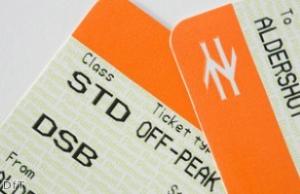
Want to know what's been happening in the UK rail industry this month? Read on to find out.
East Coast franchise for Inter City Railways
The big rail news of the month is the fact the East Coast franchise has been awarded to Inter City Railways, a consortium comprised of StageCoach and Virgin.
Running for eight years, the new franchise will start on March 1st 2015 and could be extended for a further year at the transport minister Patrick McLoughlin's discretion. More than £140 million is set to be invested in the route, which runs from London to Edinburgh and passes through the likes of Peterborough, Leeds and Newcastle.
Among the changes will be 23 new services from London, with an extra 75 station calls each day. Some 31,000 more seats will have been added to morning peak time services, while 12,200 additional seats will be added to the fleet as a whole, representing a 50 per cent increase.
Mr McLoughlin stated: "This is a fantastic deal for passengers and for staff on this vital route. It gives passengers more seats, more services and new trains.
"We are putting passengers at the heart of the service. I believe Stagecoach and Virgin will not only deliver for customers but also for the British taxpayer."
The East Coast line had previously been state-run and the decision for it to be re-privatised is somewhat controversial. A report from the Office of Rail Regulation (ORR) recently revealed the route is the most efficient in the UK, costing the taxpayer less than any of the 15 privately-run rail franchises in the country.
Gatwick Express and Thameslink get new trains
The Department for Transport has revealed hundreds of millions are being spent on the creation of new trains for the Gatwick Express fleet and Thameslink route.
Some 108 new carriages will replace the existing trains used in the latter and are due to enter service in 2016. Meanwhile, 116 new carriages will be introduced to the Thameslink line between Bedford and Brighton from December this year.
Rail minister Claire Perry stated: "These new British-built trains are great news for passengers and a boost for the economy."
Too many delays, says ORR
There have been too many delays on the UK's rail lines between April and the end of October 2014. This is according to the ORR, which has recently released data relating to the industry's performance in this period.
Network punctuality was 89.1 per cent, which is 0.7 percentage points below the target set by the regulator. It was also revealed that Network Rail overspent by £40 million in the year to date and an overspend of £112 million is forecast for 2014-15.
ORR chief executive Richard Price stated: "Too many people are facing too many delays. It is the biggest source of dissatisfaction with the railways, and the industry needs to tackle the problem."
In more positive news, Network Rail was found to have made good progress in improving safety at level crossings. This has been achieved through a programme of closures, as well as more effective risk assessment and the introduction of improved technology and systems.
HS2 momentum continues
Robert Goodwill, under secretary of state at the Department for Transport, recently discussed the development of the High Speed 2 project at the the Chartered Institute of Logistics and Transport HS2 conference.
He claimed the debate surrounding the development has moved on from whether HS2 will be built to how it will be built. However, he also stressed the importance of planning and coordination at local levels if the project is to be a success.
Interested in a career in rail? Get in touch with Unity.
Job profile: Customer service assistant
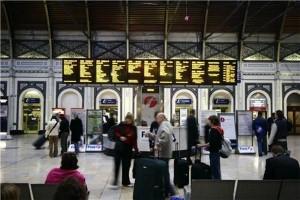
Working in rail doesn't just mean driving a train, as there are a myriad of other roles available that are integral to the smooth running of the sector. One of the cogs in the well-oiled machine is a customer service assistant.
What does it involve?
The primary role of a customer service assistant is to deal with the million of passengers that use the UK's train service every year. People in this role will usually spend their entire day dealing with the general public, answering questions and thinking quickly on their feet when an issue arises.
A person suited to this particularly job would be able to thrive in challenging situations, especially when dealing with upset or unhappy customers - particularly during delays and other disruptions.
The role can vary dramatically, but common duties include :
- Providing advice and assistance to customers.
- Providing general travel information and helping passengers purchase the correct tickets.
- Issuing penalties in cases where people haven't bought a ticket.
- Complying with all safety requirements and ensuring personal safety, as well as that of others at all times.
- Communicating effectively with colleagues.
- Making passenger announcements.
- Responding to customer requests and finding solutions that keep the needs of the business and passenger in mind.
- Carrying out emergency procedures when required.
- Helping to load and unload luggage.
- Signalling the guard or driver to depart.
- In smaller stations, you may need to undertake some cleaning tasks or may be asked to clear snow and ice off platforms during spells of cold weather.
A customer service assistant can be based in several different places across the station, meaning the job could be different from day to day. The role could involve manning an information point, where you would need to provide customers will live information on train times, as well as wider transport information. You could also work in the station reception, meaning you would be the first point of contact for contractors, directing them where to go.
What skills or experience are needed?
As your role as a customer service assistant can vary, those with a wide range of skills and experience are likely to be successful candidates.
Anyone looking to apply for this position should have:
- Strong communications skills, as you will be expected to engage with passengers, colleagues and third parties eg workmen.
- Excellent customer service skills.
- The ability to remain calm when under pressure, as you could come into contact with frustrated customers, particularly if trains have been delayed.
- Strong numeracy skills.
- A good memory for timetables, fares and regulations. This information will often be available elsewhere, but being able to answer a query without having to leave the customer and check details will mean providing better service.
- An awareness of health and safety.
- The ability to be able to work without supervision, as well as part of a team.
What are the working conditions like?
Customer service assistants would be expected to work office-based environments, such as in information booths, as well as on the platform. Generally, your time should be evenly split between these two business areas.
You should be provided with a uniform that will include items to keep you warm during the winter. People working in this role typically work between 37 and 39 hours per week, in shifts of up to 12 hours, which can be scheduled any day.
The salary would depend on your experiences and some firms may offer additional benefits, such as discounted travel.
Next steps
If you like the sound of this role and think you've got what it takes to work in customer service in the rail industry, then take a look at Unity Recruitment's latest vacancies. Don't hesitate to contact us if you have any queries or questions.
The projects that are transforming UK rail
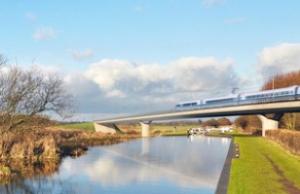
The British rail industry is the oldest in the world and every time you travel on a train you are experiencing a part of that history. Indeed, the vast majority of rail routes in the UK have been in use for the best part of 200 years.
However, this is not an industry that is stuck in the past, and a number of exciting new projects are currently underway. These schemes are being undertaken in a bid to ensure the UK's rail services are some of the best in the world and make it an interesting time to work in the sector.
We take a look at some of the biggest projects below.
Crossrail
The 188 km Crossrail project is being undertaken in order to make it possible for an extra 1.5 million people to commute to London's main business districts within 45 minutes. Due to open in 2018, the development will boost the capital's rail capacity by ten per cent.
Crossrail will run from Reading in the west and through London to Essex in the east. The project is expected to deliver economic benefits of around £42 billion.
Thameslink
Another major rail development is Thameslink. This is a £6.5 billion project that has the aim of "transforming" travel between the north and south of London. Due to be completed in 2018, it will deliver train operator services every two to three minutes at peak times. London Bridge station will also be completely renovated.
Midland main line
In some parts of the UK, certain rail routes are not electrified. This limits the number of trains that can travel and means journey times are longer. The Midland main line project will solve this problem between London St Pancras and cities such as Leicester, Nottingham, Derby and Sheffield.
Over £1.5 billion is expected to have been invested in electrifying this route by 2020 and it is hoped this will eliminate bottlenecks and improve capacity. Greener trains will also be able to use the route and it is estimated this could reduce its carbon footprint by up to 11,000 tonnes.
Nottingham Hub
One project that is near to completion is the Nottingham Hub development. This £150 million scheme aims to turn Nottingham Station in a central hub for the East Midlands region and is due to be finished within the next few weeks.
The station itself has been completely refurbished, with a new platform added and six miles of surrounding rail track re-laid. A tram extension and new tram stop at the station is due to be completed before the end of this year.
HS2
While each of the projects above are set to have a big impact on the network rail, none can match the High Speed 2 (HS2) development. This will see completely new high-speed rail lines built between London, Birmingham and major northern cities such as Manchester and Leeds over the next 20 years or so.
The project is estimated to generate £59.8 billion in user benefits and a further £13.3 billion in wider economic gains. From a rail jobs perspective, it will provide numerous employment opportunities. In the West Midlands alone, it is forecast to create some 22,000 permanent jobs. Meanwhile, the first stage of the project is expected to create 1,500 new full-time positions and close to 40,000 temporary jobs.
Interested in pursuing a career in rail? Unity Recruitment can help. Get in touch today and we'll discuss what we can do for you.
c2c rail franchise starts in east London and Essex
The c2c rail franchise has started in east London and Essex.
Officially launched on Monday (November 11th), the new agreement will provide passengers on the Essex Thameside route with extra trains, more carriages and additional services, a Department for Transport statement said.
The franchise will last for 15 years and will deliver 17 brand-new trains, as well as discounted fares, new ways to buy tickets and free Wi-Fi.
Rail minister Claire Perry commented: "Passengers deserve the best from our railways, and they will see the biggest ever package of benefits from this franchise, with new and improved trains and extra services."
"It is great to see c2c really thinking about what their passengers need," she added.
As a result of the new franchise, in excess of 25,000 extra seats will be available to passengers travelling during the morning peak period once the contract comes to an end in 2029.
Over £30 million is to be spent on improving stations such as Fenchurch Street and Barking, while an enhanced compensation system will automatically provide reimbursement to people whose train is delayed.
Regarding punctuality, c2c has committed to ensuring more than 90 per cent of its trains reach their destination within a minute of the scheduled time by the end of 2018.
Julian Drury, c2c managing director, stated: "Today we are launching the biggest single package of improvements for passengers ever seen on c2c."
This month has also seen deputy prime minister Nick Clegg reveal planned improvements to rail services in the north of England.
It is hoped this will help to shorten journey times and tackle the problem of overcrowding. At present, one-third of the 25 million people who use cross-Pennine rail routes are forced to stand during their commute.
Mr Clegg revealed he wants to see electrified links between Liverpool and Manchester in the west and Leeds, Sheffield, Newcastle and Hull in the east. It is thought this would cut journey times between Manchester, Leeds and Sheffield to 40 minutes.
Civil enforcement officers FAQ
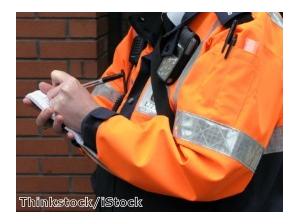
We're all familiar with civil enforcement officers. Indeed, those of us who drive are likely to have been given a parking ticket or two in our time. However, despite their familiarity, most people actually know very little about the day-to-day activities of officers.
With this in mind, we've put together some answers to a number of frequently asked questions that will be of interest to anyone thinking of taking up the role.
Is a civil enforcement officer the same as a traffic warden?
Many people still see civil enforcement officers as traffic wardens and while the two roles are quite similar, there are some differences. The latter is no longer an official position and has been replaced by the officer role.
Traffic wardens were normally a part of the police force and were responsible for directing moving vehicles as well as enforcing parking regulations. Civil enforcement officers, however, are employed by local authorities or private companies and deal solely with parking issues.
What are an officer's main duties?
A civil enforcement officer's primary duty is to ensure parking regulations are upheld. The majority of an officer's day is spent patrolling a set beat to ensure no vehicles are parked unlawfully, issuing tickets when necessary.
The role is not all about enforcement, however. Officers are now being encouraged to provide a high level of all-round customer service, providing the public with useful information and advice.
Do you have to wear a uniform?
Yes. All civil enforcement officers are issued with an uniform, which must be worn at all times to ensure they are clearly visible to the public. The role involves being outside all year round, in all weather conditions, meaning a warmer coat will be issued in the winter months.
Is the position commission or bonus-based?
It's a common misconception that civil enforcement officers are incentivised to give out as many parking tickets as possible. This is rarely the case and officers are simply tasked with making sure parking rules and regulations are followed.
What's the pay like?
The starting wage for a civil enforcement officer is normally around £15,000 per year. With more experience, this has the potential to go as high as £30,000. In many cases, officers are paid an hourly rate.
Are there any perks to the role?
It would be fair to say that civil enforcement officers don't have the best reputation with the public, but there are some perks associated with the role. Working in the public sector brings better pay and benefits such as holidays and pensions.
If you're the kind of person who enjoys being active rather than sitting at a computer all day, the role could be ideal as you'll spend most of your time on your feet in the open air. There's also the opportunity for progression into more senior roles such as parking manager.
How can you get involved?
If you're interested in starting a parking career as a civil enforcement officer, take a look at our current vacancies. There are no set requirements for an entry-level position, but any prior experience of parking will always be useful, as will a background in customer service and good GCSEs in maths and English.
You can learn more about how to get into parking by reading our guide.
Top challenges for civil enforcement officers
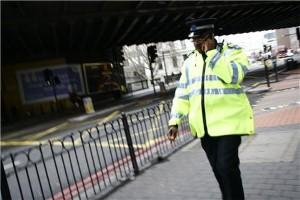
There's no denying that working as a civil enforcement officer has its ups and downs. From being out in the open air, to having to deal with angry members of the public, it's a position that has a number of pros and cons.
If you're interested in becoming an officer, there are a number of challenges you'll need to overcome if you're to be a success. We take a look at some of these and provide advice on how to get around them below.
Getting around
One of the most simple challenges of being a civil enforcement officer is getting around. You'll spend most of your day patrolling your beat looking for any vehicles that are breaching parking regulations.
On the whole, this is a good thing. You'll be out in the open air and getting a good amount of exercise, rather than being sat in front of a computer screen all day. However, this can have its downsides too, as you'll be expected to be out and about regardless of the weather.
So, to be a successful civil enforcement officer, you must be ready and willing to get out there come rain or shine.
Coping with conflict
The biggest challenge officers have to overcome is dealing with conflict. While the majority of people accept parking tickets with good grace, there is always a small minority who react angrily. Officers need the confidence to deal with these situations and the ability to prevent them from escalating.
As a result, it's vital for anyone in the position to develop strong conflict resolution skills that allow them to calm people down and avoid a complaint or grievance developing into something worse. This is undoubtedly the most daunting part of being a civil enforcement officer, but it's a vital aspect of the position.
What's more, having the ability and confidence to deal with conflict is a skill that not many people possess and can come in handy both in the working environment and day-to-day life.
Keeping up
A different challenge that is involved with being a civil enforcement officer is keeping up with what's going on in the world of parking. To do the job effectively, officers need to be aware of the latest regulations and the priorities of the local authority or organisation they are working for. Being aware of industry goings-on is especially important for anyone look to move up the parking career ladder.
Tackling tech
Technology has had a profound impact on almost every aspect of day-to-day life and the world of parking is certainly no exception. As a civil enforcement officer you'll need to be computer literature to a good degree and comfortable using equipment such as hand-held cameras and printers, cameras, two-way radios and mobile phones.
Interested in becoming a civil enforcement officer? Or maybe you already work in the industry and are looking for your next position. Either way, Unity Recruitment is here to help as parking is our speciality.
Take a look at our vacancies to see if there's anything that catches your eye. Alternatively, feel free to get in touch and a member of our team will be happy to discuss your options.


