

The ultimate interview checklist
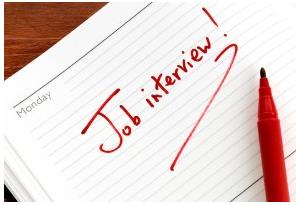
Job interviews. Like trips to the dentist and paying tax, they are one of those experiences that no one really enjoys, but have to be done if you're going to get ahead in life. For many people the interview process is a stressful time and it can be easy to let your nerves get on top of you.
The best way to prevent this from happening is to prepare as thoroughly as possible. Not only will this help you overcome your nerves, you'll also be in a much better position to impress the interviewer and land the job you're after.
To help you prepare, we've put together a ten-point checklist of the things everyone should do before they have an interview. Carry out each step and you'll be in a good position to go into that interview and come out with a positive result.
1. Do your research
First things first, you need to know the basics about both the job you've applied for and the company you want to be employed by. Interviewers are always looking to hire someone who genuinely wants the role on offer and showing you've gone to the effort to do some research will demonstrate this.
It will help your performance too, as having a good understanding of the job and some knowledge of the company will inform your answers and help demonstrate how your skills and experiences are relevant to the vacant role.
2. Think of some potential answers
No two interviews are ever the same, but almost all of them will have at least a few questions in common. It's always worthwhile to try and think of some potential answers to questions you might be asked, as this will reduce the chances of you having to come up with a response completely off the top of your head. Click here to learn more.
3. Put in some practice
Following on from point two, there is never any harm in practicing some questions and responses prior to your interview. Get someone to help you out with this if you can and ask them to test you on what you know about the company/job and to fire some practice questions at you. This isn't an essential step, but it will certainly help to ensure you're prepared.
4. Plan your questions
While the vast majority of an interview is spent answering questions, it's also crucial to ask a few of your own. Again, this can show your interest in the role and gives you the opportunity to find out some information about the position you might not know. Have a few questions in mind going into the interview and don't be afraid to ask something in response to anything the interviewer says.
5. Where are you going?
The next few steps are all about getting the logistics right. Firstly, you need to be sure of exactly where and when the interview will be. This may sound obvious, but turning up late because you didn't know which floor of a building your interview was being held on won't do you much good. If you can, try to find out who is interviewing you as well. That way, you'll know who to ask for.
6. How will you get there?
Once you know where you're going you need to think about how you're going to get there. If the journey will involve public transport, factor in time for any potential delays. After all, it's always better to be early than late. Ideally, you want to arrive ten to 15 minutes before the interview.
7. What are you going to wear?
Another important step in the interview preparation process is to think about your outfit. First impressions count and it's always good to look the part. Consider what you're going to wear a few days before the interview and make sure everything is clean and ready to go. Watch our video for more information on what makes for a good interview outfit for men and women.
8. Get a good night's sleep
The chances of an interview going well are greatly enhanced if you look and feel your best, so a good night's sleep is always recommended. It might not seem important, but being well rested could be the difference between an interview performance that lands you the job and one that does not.
9. Stay calm
Being nervous before an interview is natural and most interviewers will take this into account in their assessment. However, it's important not to let your nerves get the better of you and affect your chances. Try to remain as calm as possible and remember that even if you don't get the job, it's not the end of the world.
10. Be positive
An interview is essentially a chance to blow your own trumpet and convince an employer you are the right person for the job on offer. Obviously you don't want to go overboard and seem arrogant, but you must not be afraid to highlight what it is that makes you special. So, smile, stay positive and always try to portray yourself in a good light. Remember, if you don't sell yourself, no one else will.
New school parking regulations to come into force

The school year is back and with it comes the return of the school run.
Millions of parents will be taking their children to and from school over the the next ten months or so and those that choose to leave their car too close to school may be hit with a fine of up to £100 due to new regulations.
From October onwards, vehicles that are parked directly outside a school will be penalised under a public spaces protection order (PSPO) - regulation that has been introduced in a bid to reduce anti-social behaviour.
PSPOs can also be applied to actions such as aggressive begging and street drinking, with the fine for a minor offence generally between £70 and £100.
The return of the school year is certainly a busy time for civil enforcement officers and those with careers in parking.
Research from British Car Auctions (BCA) has revealed 57 per cent of UK motorists have reported seeing illegal parking outside of school gates. The situation is most severe in Scotland, where 62 per cent of drivers highlighted it as a problem.
More than a quarter (28 per cent) of the parents surveyed said they have seen arguments between other parents and residents over parking spaces located near to schools. This is most common in London, with 30 per cent of respondents from the capital saying they have witnessed disagreements.
Tim Naylor of the BCA stated: "It’s clear from our survey that the stresses of the school run are getting motorists hot under the collar.
"There are potentially dangerous choices being made by some drivers when it comes to double-parking outside the school gates and 'drop and go' tactics that leave pupils having to negotiate busy roads before reaching the safety of the school."
More than half of the people surveyed said they would support the introduction of drop-off areas near schools to tackle congestion and parking problems.
Five reasons why you should work in rail

The railways help to keep the UK running and play a key role in the day-to-day life of the country. As well as helping people get from A to B, the industry also employs thousands of people in a wide range of varied roles.
Whether it's customer service or high-level engineering positions, rail can represent an interesting and rewarding career path. Not quite sure if a rail job would be for you? Here are five reasons why working in the sector is worthwhile.
Strong demand
Every single day, millions of people across the UK catch a train and for many of these individuals being able to do so is vital to the way they live their life. With the government keen to reduce pollution and harmful emissions, it's likely even more people will be encouraged to take the train over the next few years.
As rail remains so important, there's a strong chance demand for skilled staff to work in the sector will be high for the foreseeable future, which is good news for anyone hoping to find a job in the industry.
A bright future
Another good reason to work in rail is that it's an industry that is going places. One of the biggest developments in the sector's long history will be getting underway in the next few years, as the High Speed 2 (HS2) project will connect London to Birmingham and then Manchester and Leeds via a new line that will cut journey times and is predicted to have a big impact on the UK economy.
Some 40,000 jobs are expected to be created in the first stage of the project alone and it is sure to support a number of new roles once complete. In addition to HS2, the UK's rail infrastructure will continue to be improved in the coming years and skilled professionals will be needed to make this happen.
See the country
One of the major perks of many rail jobs is the fact they allow you to travel the country, and possibly beyond, as part of your work. Rail services run the length and breadth of the UK and people who are employed on the trains get a chance to see the nation's different towns and cities free of charge. Those lucky enough to work on the Eurostar may also get the opportunity to see France and Belgium while on the job.
A range of employers
Since the UK's railways were re-privatised back in the 1990s, a number of commercial operators have emerged that offer employment opportunities in the sector. At present, there are 28 companies running train services in the country, including the likes of CrossCountry Trains, Virgin Trains and London Midland. There is also Network Rail, which oversees the industry and is responsible for ensuring trains arrive on time, as well as the maintenance of the rail infrastructure.
Variety
Another plus of working in rail is the sheer variety the industry has to offer. There a wide number of roles available in the sector, ranging from customer service and train drivers to engineers and signallers. This means there is a greater chance of finding a position that suits your skillset and background. According to the StageCoach Group, there are currently 190,000 people employed in rail and due to the industry's variety there is a good chance you have the skills and experience to become one of them.
Think it might be time for a career change? Head to our vacancies page and see what jobs we currently have on offer.
Parking appeals officer job profile

Imagine a career in parking and the first position that springs to mind is normally that of a civil enforcement officer, patrolling a beat, issuing tickets and providing advice to motorists. However, there are several other interesting positions available in the sector, one of which is parking appeals officer. Read on to find out more.
What does it involve?
The primary function of a parking appeals officer is to provide a responsive service to individuals involved in a parking dispute - an obvious example of this being a driver who has been given a ticket they feel was unwarranted and want to challenge the fine they have been charged.
Appeals officers are responsible for deciding if the appeal is valid, corresponding with the individual over the phone, managing their appeal if it goes ahead and dealing with any issues that might arise. A wide variety of duties may need to be undertaken, ranging from issuing refunds to dealing with bailiffs.
Parking appeals officers are often required to represent clients at adjudications and also have to attend seminars and other working groups from time to time. There are more admin-based duties involved too, such as data entry and invoicing.
What are the working conditions like?
This is primarily an office-based role, although it does include the opportunity for travelling out to adjudications and other events as mentioned above. Working hours tend to be fairly regular and are normally split over Monday to Friday. This is relatively well-paid position, with potential salaries ranging from £20,000 to £40,000. Parking appeals officers tend to be hired by local authorities, meaning they enjoy the benefits of public sector employment, such as higher pay and good pensions and holidays.
What experience is needed?
There are number of criteria you'll need to meet if you are to successfully become a parking appeals officer. Firstly, knowledge of the parking sector, a good understanding of all the related regulations and the Traffic Management Act of 2004 is vital. To have this level of experience you'll need to have already worked in parking in some capacity. Previous experience of appeals is a massive bonus.
It is also crucial to have worked in a customer service environment and be used to dealing with the public in a calm and confident fashion. You will need to be able to maintain a tactful and diplomatic manner in all situations and remain composed in the face of pressure. People can get aggravated where money is concerned, so it's important you are able to stay professional at all times and try to diffuse any heated situations.
Some of the other skills and experience that are important for this role include :
• Strong analytical skills and the ability to use your own initiative
• A good academic background
• Excellent communication skills
• Self motivation
• Flexibility and ability to cope with a varied range of duties
• Computer literacy
• Ability to work effectively as part of a team and take direction when necessary
Next steps
If you think you fit the bill and would like to become a parking appeals officer, why not take a look at our vacancies page and see if there are any positions currently available? If you've got any questions about the role or a particular job that's on offer, feel free to get in touch with our team who will be happy to help.
The history of UK rail
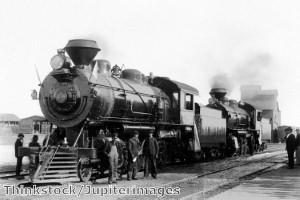
The UK rail industry has been creating jobs for the best part of 200 years. From the development of the first ever steam engine in the 19th century to the plans for a high-speed network being discussed today, British rail has a fascinating history that few other sectors can match.
Beginnings
The rail industry's beginnings can be traced back to the early 1800s, when a number of steam-powered locomotive engines were developed in the UK. However, many historians consider the sector to have really gotten started in 1825, with the opening of the Stockton and Darlington line on Teesside, which was the world's first steam-powered railway.
Rail would go on to play a crucial role in the Industrial Revolution, providing the fastest and most efficient means of transporting people, goods and resources known to man at that point in time. One of the most prominent figures in the early development of rail was George Stephenson, who worked on the development of both the Stockton and Darlington and Liverpool and Manchester railways.
Nationalisation
Rail's popularity grew throughout the 1800s and into the 20th century, becoming an increasingly important part of the country's day-to-day life. In 1948, the industry was nationalised and brought under the control of the government. By the 1960s questions were being raised about the profitability of the sector and this led to the Beeching Report, which caused a number of secondary rail lines to be closed down across the country - a decision that remains controversial to this day. This period also saw the end of steam power, as electricity and diesel took over as the primary means of running trains.
Privatisation
The rail industry as we know it today started to come into being in the 1990s, as between 1994 and 1997 it was privatised once again by the Conservative government in a bid to increase passenger numbers. Statistics suggest that this goal was achieved, as the number of people using trains is now believed to be at the highest level for some time. Various commercial operators have taken charge of the running of the nation's rail lines since the industry was privatised and the number currently stands at 28.
Rail today
According to figures from the Stagecoach Group, the UK's rail network currently consists of more than 2,500 stations and over 40,000 bridges and tunnels. These help to cater for the 1.3 billion passenger journeys undertaken each year, with around 270 million of these being business trips. In excess of 19,000 people are employed in the sector, filling a diverse variety of roles that range from customer service positions to advanced engineering and technical jobs.
It's clear then that the rail industry still plays a vital role in the day-to-day operations of the UK economy. The sector is not resting on its laurels however, with the High Speed Rail 2 project set to connect London to the Midlands and major northern cities over the next few years. This represents the next step in the progression of the industry and is sure to add another interesting chapter to its already fascinating history.
Indeed, rail can probably be regarded as one of the greatest innovations to come out of the British Isles, as it has transformed public transport and economic activity the world over and its influence shows no sign of waning.
Impressed by the rail industry's past and want to become a part of its future? Unity Recruitment can help. Check out our latest vacancies or get in touch to see how we can find the right job for you.
The interview essentials

Unless you're incredibly lucky, a job interview is something you'll have to face at some point during your career. Most of us will attend numerous interviews throughout our working lives and they can be some of the most nerve-racking but potentially rewarding experiences we ever undertake.
Sadly, there's no secret formula for job interview success, but there are some essential things to get right, which will give you a much better chance of landing your dream job.
Know your stuff
The single most important factor for interview success is to learn as much as you can about the job and company you have applied for. Unless you're an amazing blagger, it will be very hard to get far without this information.
You don't need to memorise the company's most recent financial results off by heart, but it's standard practice to at least know the basics about your potential employer. After all, would you hire someone who couldn't be bothered to do their research?
Learning as much as you can about the role itself is incredibly useful. Know the job description inside out and it will be much easier to explain what makes you the right person for the position.
Practice makes perfect
Undertaking a few practice sessions before your interview can be the difference between success and rejection. Try and imagine some of the questions you're likely to be asked and practice your answers. Responding in the interview will be much easier if you've already got an answer in mind.
Of course, you can't know for sure what the interviewer is going to ask you, but there are some common questions that tend to crop up. For example, what are your strengths and weaknesses, why do you want this position and where do you see yourself in the future all tend to be asked fairly regularly.
Not all the questions you're asked will be as straightforward as this however, and it's always worthwhile to expect the unexpected. Be ready to think on your feet and there's less chance you'll be caught out by a surprise question.
An important part of the interview process is asking questions yourself, as you'll find out some useful information and demonstrate your interest in the role. Make sure you always go in with a few potential questions of your own in mind.
Plan for perfection
First impressions count and nothing gets an interview off to a worse start than turning up late. Avoid this happening to you by planning your journey to the interview meticulously. Make sure you know exactly where to go and how to get there. If you're relying on public transport, factor in plenty of time in case of delays and aim to arrive ten to 15 minutes early.
Little details such as remembering the name of who will be interviewing you can make a difference and ensure you have a contact number so you can let them know just in case something does still manage to go wrong and you're going to be late.
Look the part
In an ideal world, appearance wouldn't matter in a job interview, but, alas, it does. As mentioned earlier, first impressions count and looking the part will instantly get you off to a good start. Prepare your outfit the night before and make sure everything is clean, ironed and in good condition.
Turning up looking scruffy will give the impression that you don't care too much about the position and couldn't be bothered to make the effort. However, you don't want to go overboard, as wearing a revealing outfit or an overpowering perfume/aftershave won't do your chances much good either.
Think positive and sell yourself
It's important to always remember that an interview is essentially an opportunity to sell yourself and showcase why you're the right person for the job. Positivity is key to this and while blowing your own trumpet may not come naturally, it's what needs to be done to impress interviewers.
Don't be embarrassed to talk about your skills, achievements and all the other things that make you great. There's nothing worse than coming out of an interview feeling like you've undersold yourself, so if there's anything that you think strengthens your application and makes you stand out from other candidates, make sure to mention it!
Follow the advice above and you'll be on a solid footing for any job interview and stand a better chance of landing the position you're after. Here at Unity it's our priority to help you find the job of your dreams and we'll be uploading regular interview guides over the coming months, so make sure you stay tuned.
Rail jobs - an overview

Few industries have played a bigger role in the development of modern Britain as rail. The sector was one of the driving forces in the Industrial Revolution and still remains a vital part of the country's economy today.
It's no surprise then that rail is one of the most rewarding industries to work in. According to the StageCoach Group, there are 190,000 people employed in the sector and they are responsible for maintaining the nation's 20,000 miles of track and ensuring the 1.3 billion passenger journeys that occur each year go as smoothly as possible.
But what sort of jobs are available in rail and what do they tend to involve? Read on to find out.
Driver
The obvious position that springs to mind when you think of rail jobs is the train driver. These individuals are responsible for getting people from A to B safely and the day-to-day lives of millions of people depend on their ability to do so. Driving a train can be a more varied position than you may have imagined, with typical duties ranging from carrying out engine checks to making passenger announcements.
Engineering
If you're looking to pursue a career in engineering, the rail industry provides a number of interesting opportunities. Rail engineering technicians carry out a wide variety of important duties, ranging from building new train carriages to testing electrical and pneumatic systems. There's plenty of scope to progress and move up to more senior positions, such as maintenance team leader or engineering workshop manager too.
Customer service
The rail industry offers a wide range of customer-facing positions. Whether it's the conductor checking tickets on board or an assistant providing advice inside the station, these individuals are needed to ensure the millions of passengers who travel on trains across the country get to their destination safely and on time as often as possible. These are some of the most varied rail jobs out there, with potential duties ranging from helping a passenger who falls ill to dealing with people who try to avoid paying for a ticket, and no day is likely to be the same.
Operations
Another area of the rail sector that contains some rewarding career opportunities is operations. Examples of some of the positions available in this space include train dispatchers or controllers, who are responsible for managing the movement of trains, and signallers, who play a crucial role in ensuring the safety of rail transport.
Who is hiring?
There are 190,000 people employed in the UK rail industry, but who do they actually work for? National Rail looks after the nation's railways as a whole and has a large workforce, while the train services themselves are run by a number of organisations including the likes of Virgin, Cross Country, London Midland, First Great Western and Arriva. With some exciting developments - such as the high-speed service between London, Birmingham and the north in the pipeline - now could be a good time to get into the industry.
Want to find out more about rail jobs and potential opportunities to work in the industry? Contact us here at Unity Recruitment and we'll be happy to help.
Putting you on the spot - preparing for difficult interview questions

Job interviews can be tough - there's no two ways about it. One of the most daunting aspects of the process is when you are put on the spot with a difficult question that you just don't know how to answer.
If this does happen, it's important not to get too flustered as one question won't decide the outcome of your interview. However, it is vital to prepare as best you can, as every good answer will take you one step closer to landing the job.
So, if the prospect of being struck with a difficult question in your next interview is bringing you out in a cold sweat, don't worry - we've put together a guide on how you can prepare for being put on the spot and reduce the risk of your quest for a new job being derailed.
Be ready
When it comes to job interviews, there is no substitute for preparation. Learn as much as you can about the job on offer and the company you are hoping to work for and the chances of being stung by an unexpected question will be drastically reduced, as you'll already know the information needed to provide an impressive answer.
Some people might be tempted to think they can simply 'wing it' and come up with an answer to a tricky question on the spot. We're not going to say this isn't possible, as some of us do have the gift of the gab, but for the majority of job seekers failing to prepare is preparing to fail and it's always better to go into an interview on the back of some thorough planning.
So in addition to learning about the job and your potential employers, how else can you be ready for difficult interview questions? There's no way of guaranteeing what you will be asked, but there are some staple questions that tend to come up more often than not. Here is a selection of these and some tips for how to answer them.
What are your strengths? - The key to this question is to highlight your skills and experiences that are most relevant to the job in question - something that will be a lot easier if you've prepared well.
What are your weaknesses? - Always a tough one. The best way to respond to this question is to try and put a positive slant on your answer. For example, you can highlight a certain skill that might not be your strong point and then explain what you're doing to improve on it.
Why did you leave your last job? - This question always needs to be answered with tact. Even if you hated your old job and couldn't wait to leave, it's best not to mention that. If an interviewer hears you slagging off a former boss, they'll start to wonder if you'll be saying the same things about them later down the line. Try to focus your answer on the positive aspects of the new job and why you think it would be a change for the better.
Where do you see yourself in the future? - Another tricky question, as not many of us have our career paths nicely mapped out. Again, focus on the positives and make it clear you're ambitious with a desire to succeed. One way to do this is by asking about the potential for advancement in the company.
What sets you apart from other applicants? - This question requires you to blow your own trumpet, but you need to do it in the right way. Focus on your skills and what's good about you rather than casting aspersions on other candidates. Make it clear what your strengths are and the interviewer themselves will be able to decide whether other applicants match up.
The unexpected
The hardest interview questions are the ones you just don't see coming, and many interviewers like to throw in the odd seemingly-strange question. It can be easy to feel as if these are designed to catch you out, when really they are more about testing your ability to think on your feet and react well under pressure.
Preparing for unexpected questions is hard, as naturally you aren't expecting them, but the best way to handle this part of the interview is to stay as calm as you can and give as measured a response as possible.
However your interview goes, try to think of it as part of a wider learning curve, as sooner or later you'll need to experience another one. Remember the difficult questions you were asked and think about how you could improve your answers in future. That way, every interview you undertake will make you that bit more prepared for the next one.
Why the rail industry is going places

There are few industries that have a greater direct impact on the day-to-day life of the UK than rail. Millions of people rely on train services to get from A and B and without them the country's productivity would take a big hit.
This alone makes rail a rewarding industry to work in, but the sector is even more attractive when you look into what the future has in store for the country's railways.
High-speed developments
Easily the most exciting development taking place in the world of rail is the construction of the High Speed Two (HS2) rail network. It aims to bring the country's rail infrastructure, which is relatively unchanged from Victorian times, "into the 21st century". This will be achieved by constructing a high-speed line between the UK's major cities.
The first phase of the project will connect London and Birmingham and the second will extend the network to major northern cities Manchester, Sheffield and Leeds. Work on HS2 is due to begin in 2017 and the first trains are expected to start running between the capital and the Second City in 2026. Phase two will get underway some point after the completion of the first stage.
While the HS2 project has not been warmly received by everyone, the government expects it to provide a vast range of advantages for the country. These include generating £59.8 billion of user benefits through the extra speed, reliability and comfort provided by the service, as well as £13.3 billion through wider economic benefits such as improving provincial cities' connection to the capital.
There's certainly going to be plenty of positives from a rail jobs perspective. A high number of people will be employed in both stages of the HS2's development in a variety of roles. Indeed, the second stage of the project is expected to create 1,400 operation and maintenance jobs alone. There will likely be a significant number of roles created once the network is operational too, ranging from customer service jobs to signal conductors.
It's safe to say HS2 is the most exciting thing to have happened to British rail in a long time and for anyone hoping to get involved with the project, now could be an ideal time to start a career in the industry.
Ongoing improvements
Rail has more going for it than just HS2, however. It goes without saying that train services in the UK are not always as good as they could be. Earlier this year, Network Rail was fined a record £53 million for failing to meet Office of Rail Regulation targets regarding the punctuality of trains. The organisation was tasked with ensuring 92 per cent of services arrived on time in 2013-14, but fell short with only 87 per cent of trains avoiding delays.
While this isn't exactly good news for the UK's passengers, it could be seen as a positive from a rail jobs perspective. The rail network clearly has room for improvement and it will only achieve this by hiring the best people in all of the different roles that make up the industry. Network Rail has already invested £10 billion in improvements over the past five years and with more projects sure to follow, there will continue to be interesting options for employment within the sector. Indeed, even the £53 million the organisation has been fined is being invested in a new venture - the development of faster Wi-Fi for commuter trains in England and Wales.
Are you keen to get on board with the rail industry's bright future? If so, Unity Recruitment can help. Contact us today and we can talk about the rail job opportunities we have on offer.
Parking - the good, the bad and the ugly

A career in parking, like most things in life, can have its ups and downs. Whether you are a civil enforcement officer or a parking manager, there are both pros and cons to the role. For anyone thinking about a career in the industry it's important to take these into consideration before making your decision to apply for a job.
So, without further ado, here is a rundown of the good, the bad and the ugly of parking.
The good
There are plenty of positives to working in parking. For a start, it's an industry that has a direct impact on the way the country operates day-in and day-out. Without parking regulations and competent professionals to enforce them, the UK's crowded roads would become much more difficult to navigate and this would have a knock-on effect on the economy.
We're not suggesting civil enforcement officers and other parking staff should be recognised as national heroes, but if you work in the sector you can go home safe in the knowledge that you've played some small part in helping to keep the country running.
A major plus of being a civil enforcement officer is that you spend most of your day outside and on the move, which is great for both your health and mental wellbeing. The role is also becoming more varied than it has been in the past and this can help the day to pass by quickly. For example, officers are becoming much more customer service-focused, rather than being solely enforcement-orientated. This means that providing parking advice and guidance is becoming as much a part of the role as handing out tickets.
Many parking jobs are in the public sector and this can also be advantageous, as public workers tend to receive higher salaries than their private counterparts. What's more, holidays and pensions in the public sector are also often superior. A final positive to note is that parking is a career that offers the opportunity for progression, with it being eminently possible to move up the ladder with the right skills and experience.
The bad
We would like to say working in parking is all positive, but, as with most careers, it does have its downsides. For instance, spending most of your day outside may not be appealing to some people, especially during the winter months. However, parking is not all outdoor work and there are a number of roles such as parking manager and customer service positions that are primarily office-based.
Another downside to parking is that the hours sometimes fall outside of the regular nine-to-five, Friday-to-Saturday routine. Evening and weekend work can be required, which isn't ideal for everyone. One final negative to consider is that parking jobs, and civil enforcement officers in particular, don't exactly have the greatest reputation with the general public. Most of the old stereotypes about officers no longer apply, but it will probably take a while for the role to shake off its negative image completely.
The ugly
It would be unfair to discuss the pros and cons of parking without talking about its occasional ugly side as well. As mentioned, civil enforcement officers don't have the best reputation and can sometimes be on the receiving end of angry rants from unhappy motorists who are not pleased to find they have been issued a ticket for a parking offence. Thankfully, however, these incidents are very much in the minority and most of the interactions officers have with the public are of a positive nature.
So, there you have it - the good, the bad and the ugly of parking. Here at Unity we are confident parking's positives outweigh the negatives and you can take a look at our wide range of parking job vacancies here.


